
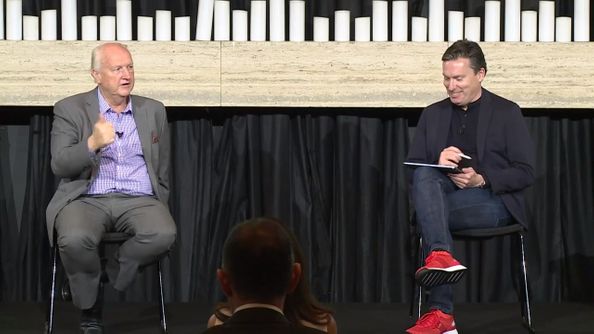
I recently participated in a session at the BioPharma Dispatch conference with Melanie Funk from Eczema Support Australia. We spoke just after lunch, and in the lunch break there was a closed session between PBAC Chair Professor Andrew Wilson and the patient groups. I was worried that having that session immediately before our session might lead to me being a bit pissed off… but the combined effect of Hunt’s introduction, Wilson’s session, and in particular a senior public servant from the Department of Health, Adriana Platona, already had me fuming before the lunch time break out session.
I appreciate it’s difficult for many in the pharma world or indeed those in senior government positions to speak at conferences like this because so much of what they do is bound up in endless red tape, legal restrictions and commercial considerations and sensitivities. And, as one of the 25 patient bodies involved, and one of only 2 to speak in a session, I am immensely grateful to have had the opportunity to be heard.
I was also really pleased that the panels of senior executives in pharma companies who spoke after my session either heard me clearly, or were already on the same page, about involving patients earlier and speaking to us in our language, rather than requiring patient groups to learn and understand their very convoluted system and its many acronyms.
Unfortunately I can’t show you the videos, so you can’t see how very dismissive the Government people were. But I’ve watched multiple times, and I’m pretty sure I didn’t misinterpret what they said.
Let’s start with Hunt. He didn’t attend the conference, just gave a pre-recorded welcome video. (Bowen was there and I *really* liked what he said – more on that at the end.) The short summary is: pharma industry has been awesome during COVID, cancer cancer cancer, the government is awesome, cancer cancer cancer, and we’ve guaranteed the listing of new medicines.
Guaranteed blowing his own horn. The new medicines funding guarantee is the biggest smoke and mirrors show I’ve seen in a long time. But I’m gonna stay on topic for the moment.
Professor Andrew Wilson, chair of the Pharmaceutical Benefits Advisory Committee (PBAC) was up in the third session. His session was fine in the beginning, talking about his belief that the national medicines policy needs to be reviewed. (The NMP is basically a cooperative agreement between the various governments, health providers and companies to provide quality use of medication and affordable access to medications.) Some stuff about gene therapy that went over my head. Then he criticised the people raising concerns about proposed changes to the PBAC pathways that haven’t been introduced yet, saying he was amused by the criticisms. He admitted that public summary documents – PSDs – are not useful for consumers, and are really just a form of minute. (That takes them 4 months to produce.) Then more alphabet soup discussing, PBAC, MSAC, PBS, MBS, PICO, PASC, blah blah blah. Someone rightly pulled them up and asked for all the acronyms to be explained.
During the questions, Professor Wilson was asked about whether budget impact has become a more important factor in decision making. Wilson said yes. This is important for us, because the whole issue with getting our medications listed is solely about budget impact. Wilson said it’s harder to make arguments on cost-effectiveness alone because the overall ask is a big ask. The removal of the pricing authority in 2014 has increased the importance of overall budget considerations by PBAC. (Migraine Australia’s submission to the new drugs inquiry asks for a separate pricing body to be reintroduced, as have a number of other submissions.)
Liz De Somer from Medicines Australia asked what can be improved about consumer (patient) input to the HTA (health technology assessment – fancy way of saying the process of assessing a new health thing). And Andrew Wilson completely rejected the question, literally saying “maybe I should, rather than answer answer that question that way, is reflect it back and say ‘what is it that people think that they want from that patient submission process, because that’s not clear to me. Even reading those submissions, I can see people saying ‘oh, it’s not working, it’s not working’, but what appears to be the response to that is ‘well we think it should be listed and therefore it should be listed’.
<insert a lot of expletives about here>
Migraine Australia has been very clear about what it wants: patient consultation first, early in the process, before the drug is considered by PBAC. We have been very, very, very clear, and have told PBAC and the Minister – and said again at this conference – that we find it completely unacceptable to be asked to make submissions on an application without being able to see what is in the application. Literally the only thing you are given is the name of the drug. We want stakeholder meetings and round tables, we want the capacity as patients to ask for those things and to have the right of appeal. We want an equal seat at the table, rather than to be condescendingly dismissed as an afterthought.
Wilson went on to say that submissions will in the future will be more structured – i.e. fill in our form and we’ll consider only the information we want from you. He said there’s also the capacity for patient hearings, and if we need to have more of those we will. Migraine Australia has repeatedly asked for patient hearings, and haven’t gotten them, but sure.
We’ve also asked for a stakeholder meeting, and have pushed for a round table meeting of the all the CGRP drug companies, us, ANZHS (the headache specialising neuros), and Government to break the deadlock, and asked for a real world trial or a meeting to discuss some kind of pandemic access to the CGRPs as thousands lost their access to Botox treatment during the first lockdown. You know what we got? Nothing.
He said a bunch of other minimally objectionable things, and his conservatism was on full display when he argued that being a wealthy country does not mean we can afford everything and repeatedly emphasised value over speed.
By this time I was dreading the lunch session, and putting in place a number of things to stop my rage from triggering an attack.
Then comes Adriana Platona PSM, First Assistant Secretary, Department of Health, Technology, Assessment and Access, for a rousing chorus of ‘our system is fantastic and you lot are whingers’. She said that if we have the Parliamentary Inquiry (which is going on now) 5 years ago or in two years time, it would be about different drugs, but the same complaints. (She name checked migraine drugs in her list of things that we wouldn’t be talking about in two years time, so I made a point of telling her we’ll all still be talking about new migraine drugs in two years time…). She echoed Wilson in saying, and I quote, “the need for speed is not at any cost”.
It got better. “It puzzles me when there is so much criticism levelled at PBAC. Every day. As has been for the past 30 years as you can see and will continue to be so to a certain extent. It puzzles me, um, if you dislike the PBAC process so much, why are people arguing all the time about all the products going into the PBAC. It’s a mystery to me.” I really wish I could show you this video, so you could see the smug look on her face while she said this.
When asked what she has noted from the submissions to the New Drugs parliamentary inquiry, she said she was “concerned that there are a number of the submissions that seek to undermine the PBAC”. She doesn’t want the PBAC weakened. She said it “takes guts and a lot of spine to stand up, as Professor Wilson will do, to patients” and explain why they have to sometimes say no.
So at this point I’ve grabbed a can of coke and downed a handful of aspirin, and I’m absolutely fuming. Absolutely frigging no one has ever explained to us why Aimovig was rejected. Jo Watson told us it was ‘technical issues’ to do with the submission. The public summary document reads as though the only reason is there was too many migraine patients, and you better believe that’s a wholly unsatisfactory answer.
When we got to Emgality and Ajovy, and the ‘advice’ which Hunt has decided to declare a ‘legal requirement’ that they only be provided under the existing Botox cap, literally no one from PBAC or the minister’s office has given me a reason why that advice was issued. Or even how it’s legal or even vaguely acceptable for this unelected, unaccountable body to decide there should be no new taxpayer money spent on migraine. Even really, really specific questions like ‘ Can you please explain how one risk sharing agreement can be extended to multiple companies and multiple drugs with different deeds?’ was literally never answered.
Guts? Spine? How about basic decency and a modicum of respect?
Then we had the lunchtime session, another opportunity for Professor Wilson to talk the talk of ‘my ears are open’ but utterly fail to walk the walk. He – not joking – asserted that we, small underfunded patient bodies, should divert resources and time to getting people across PBAC processes. He said he would be surprised if more than one person in any patient’s body’s committee is was engaged with the PBAC processes, and we should make an effort to ensure there’s more than one. Because that’s apparently our job… serving them and being a good cog in the system.
I behaved, and only asked one question (one that was suggested by membership to ask Jo Wilson but I knew she wouldn’t answer it) which was “PBAC seems to have an issue dealing with medications for chronic conditions. Have you considered a different process or perhaps different criteria for chronic conditions”. Professor ‘my ears are open’ Wilson promptly rejected the premise of the question and said they don’t have any issue with chronic conditions, no problem here… and then said ‘but if you have any suggestions I’m happy to hear them’. Mate, if you won’t accept the very idea that there may be a problem, you aren’t going to accept any suggestions to fix the problem you don’t believe exists.
Normally I’m all for engagement. I strongly believe that good communication is the key to any successful project or process. But when dealing with people so stunningly out of touch, arrogant and convinced of their own righteousness as the likes of Andrew Wilson or Adriana Platona, one has to take a moment to consider that engagement can be damaging.
For nearly two years I have excused much of the behaviour of the PBAC as just ignorance of what migraine is and how it is managed, with a side-helping of migraine stigma and a bunch of systemic failures and obstacles. But, after some time to mull and rewatch what happened in that conference, I am left wondering if it is worth my time to bother engaging with these people at all. It certainly is not good for my migraine, and not good for my mental health. And given the echo-y chorus of the PBAC is awesome and we’re always open to conversations blah blah, from a system that seems to be exclusively for condescing arrogant so-and-so’s who have sought to belittle us from reducing our submissions to PBAC to a single sentence in the PSDs to Hunt calling us ‘astroturf’… it’s not good for them either.
However, engaging with Chris Bowen continues to be surprising and inspiring. He spoke of our system no longer being at the forefront of medicine access, and how he believes the PBS is at a crossroads. He was emphatic that the system is supposed to be working for patients. He criticised the government for claiming drugs are a personal gift from the Government rather than an investment by taxpayers, blaming big pharma when they don’t want to list a drug, and dismissing patient groups as ‘astroturf’. He of course touched on the delays in listing our drugs, and generally in comparison to other countries. He said the PBS is no longer universal, and the telling indicator is not just the number of drugs that are not listed, but the increasing number that don’t even bother coming to the Australian market. That he is not just aware of that, but understands that, and the complexity of fixing that problem, puts him a mile ahead of everyone else in politics I’ve ever talked to. (I wrote to Hunt recently about the effect the failure to list the CGRPs have had on the pipeline, with the four other new drugs already in the US have no planned release date here. No reply.)
I’m still processing how I feel about the whole thing, but I think – for possibly the first time in my life – I’m picking a side. The best thing for health, for migraine, and me personally is a change of Government.
 Migraine Warrior
0 comments on “When engaging makes things worse”